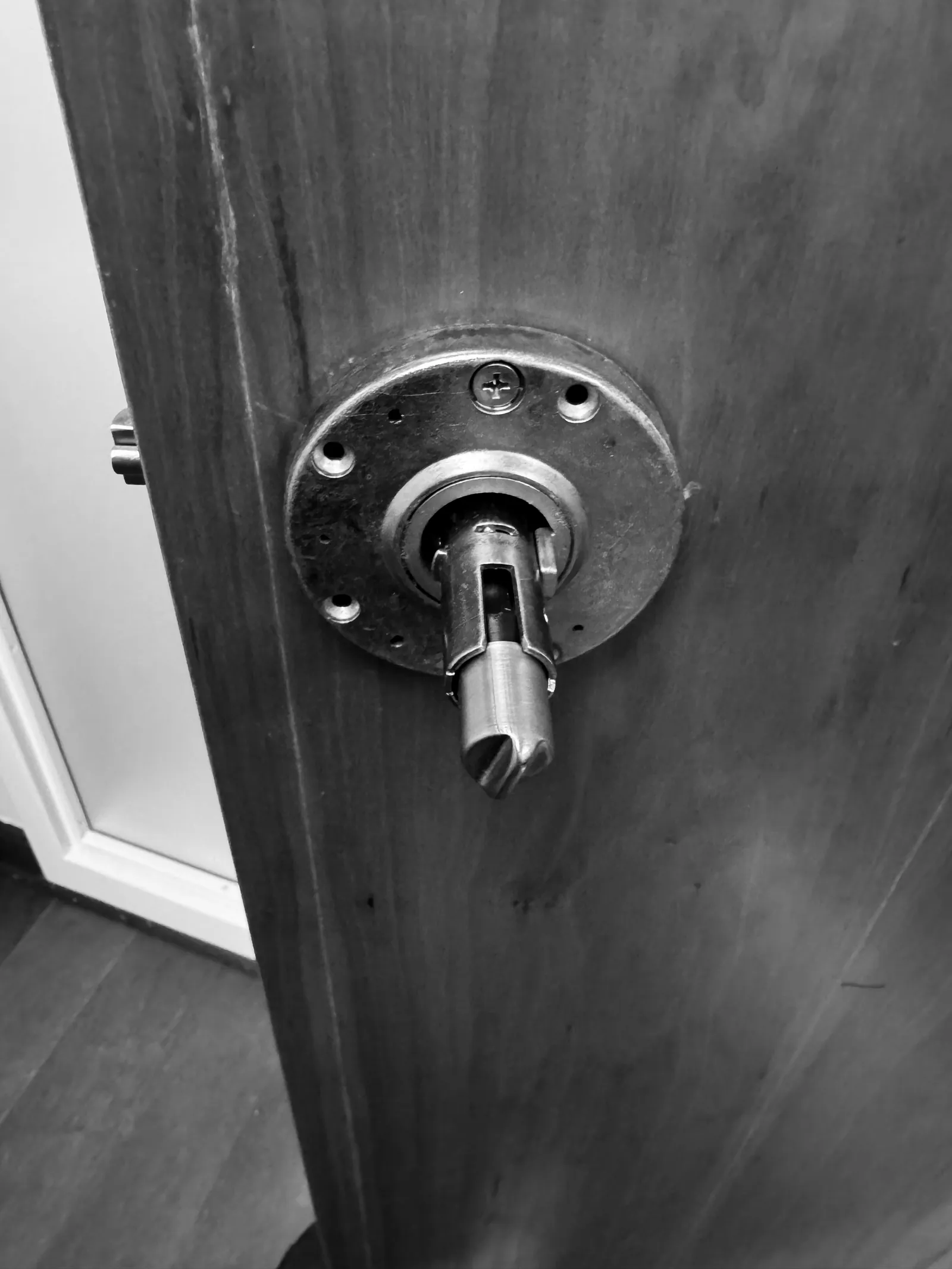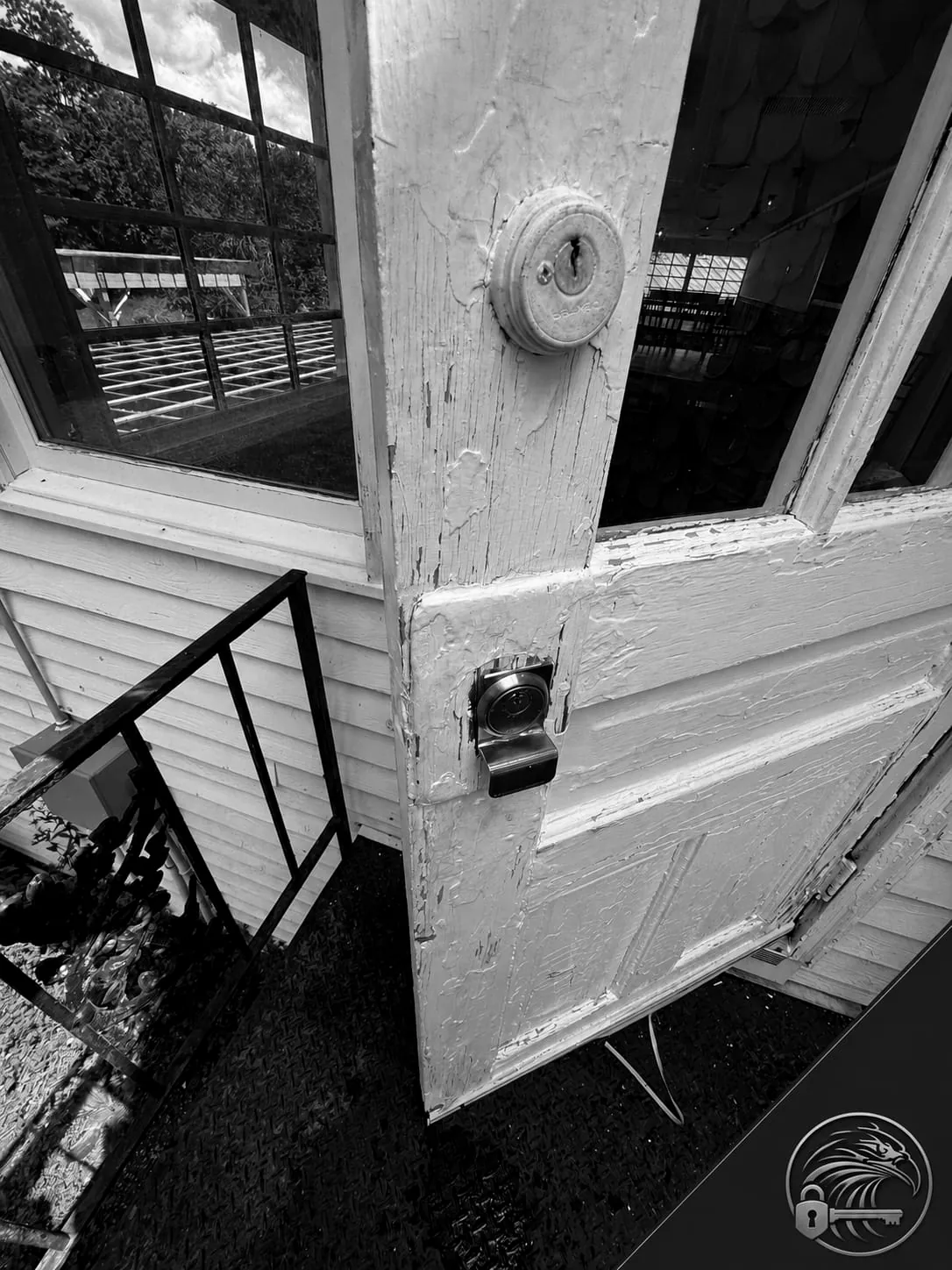
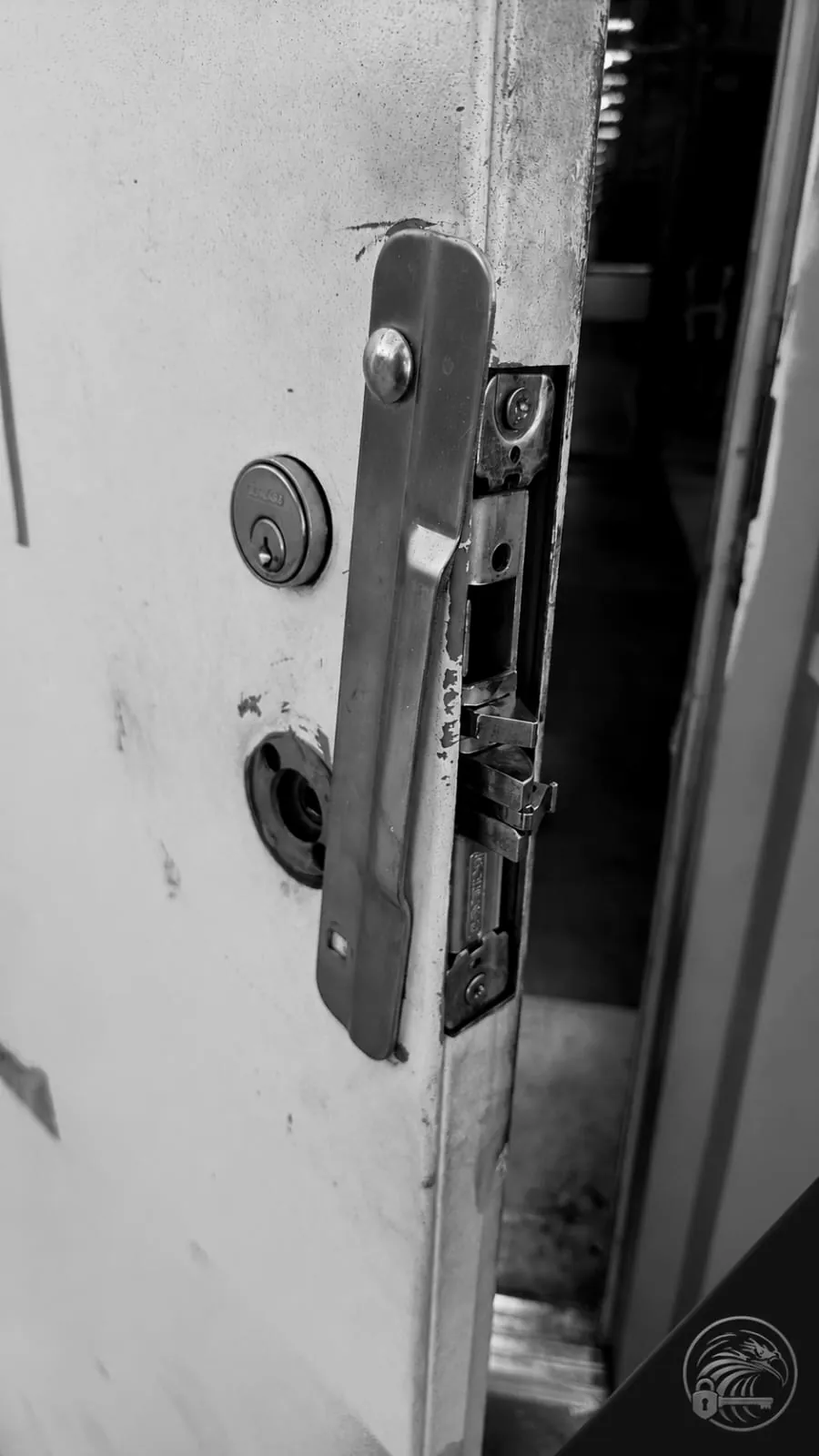
Open a Fan District front door and you will often find a lock older than the electrical wiring: a cast-iron mortise case, brass internals, and a key that looks like it belongs to a church. These mechanisms were designed for a century of service — with service. Here is how owners keep them alive.
What fails first
Springs fatigue, old grease hardens into varnish, and the James River's humidity freckles every unprotected surface. Symptoms arrive politely: a knob that does not return, a bolt that needs the door lifted to throw, a key feel turning gritty. Every one of those is a cleaning-and-springs job — until it is ignored into a broken part.
The right maintenance
A proper service removes the case, cleans the internals, replaces tired springs, and lubricates with compounds made for locks — never the household spray oil that gums a mechanism into its next failure. Performed every decade or so, it is the difference between an heirloom and a hole in the door where a modern lock had to be carved in.
Security without vandalism
Historic does not have to mean vulnerable. A modern high-security cylinder can live inside many classic cases, and a discreet modern deadbolt in a matching finish can carry the real security load while the antique hardware carries the look. That layered approach — original face, serious internals — is the standard we recommend across Church Hill, the Fan and the Museum District.
When replacement is honest
Cracked cases, worn-through bolt throws and locks butchered by earlier repairs do reach the end. A good locksmith will show you the damage inside the opened case and explain the options — including quality reproduction mortise locks that respect the door. Richmond metro dispatch: (571) 410-4035.
Locksmith questions in Virginia?
Talk to the crew: (571) 410-4035 — or find your city in the coverage register.